libnix impact study
22 sep 2026

motivation
libnix can be added to any package manager (PM) so consider this also a direction PMs will be heading in general with libnix.
this post looks into the cargo+libnix impact, i.e. using the prototype discussed in the previous post cargo-libnix, and we use:
- nixpkgs revision 1c3d5a53f03f2eb5677f6f3b34f0ef31261ba485, from Sat Dec 13 13:17:29 2025 +0000
- see full details here: nixpkgs-datamining
rust & crates.io
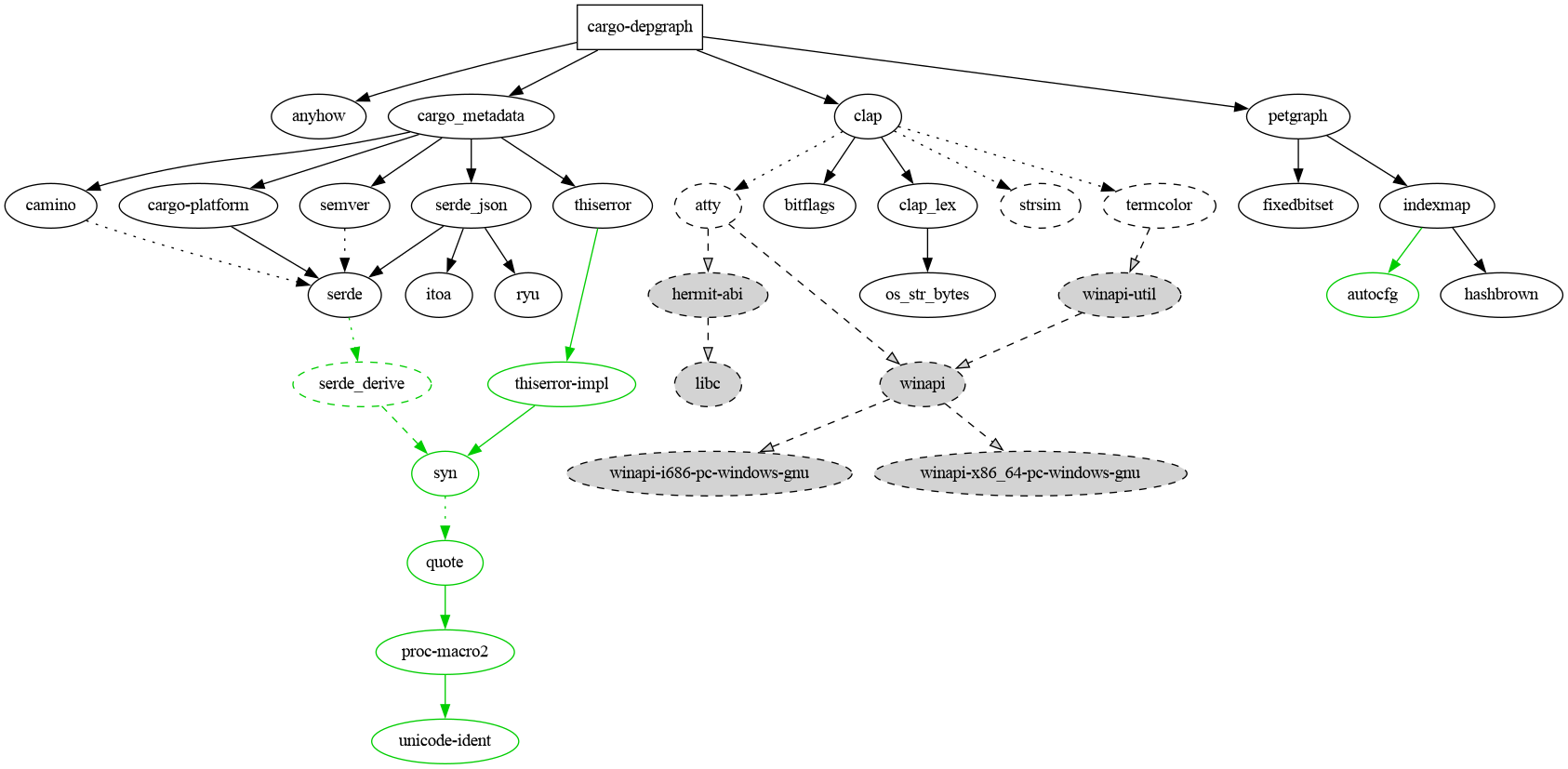
a rust project usually uses crates.io dependencies like serde, syn and similar. these can be visualized with cargo-depgraph:
these rust libraries (rlibs) are statically compiled into the final
binary but during build time they are seperate entities. especially,
since cargo-libnix shares crates.io dependency builds
beyond the ./target/ folder, we can check what the speedup would look
like, when it would be used for building software in
buildRustPackage.
cargo
revisions in
nixpkgs
cargo in
nixmultiverse lists 10 to 15 revision bumps per year from 2018 to
2026 but cargo is only one gear in a huge set of
dependencies, we need to study a better metric:
buildRustPackage implementation changes!
buildRustPackage
implementation
changes
nixpkgs architectures
nixpkgs and buildRustPackage is used with these 4
different architectures (with different nixpkgs revision than
below):
| Architecture | Packages | % of total |
|---|---|---|
| x86_64-linux | 2555 | 28.1% |
| aarch64-linux | 2517 | 27.6% |
| x86_64-darwin | 2008 | 22.0% |
| aarch64-darwin | 2007 | 22.0% |
| Total | 9087 | 100% |
total package/architecture combinations: 9087
when changing the nix implementation of
buildRustPackage, like when updating
rustc/cargo or the toolchain, this can
multiply the rebuild workload across the architectures.
direct and indirect dependencies of the 2312 buildRustPackage rust projects
these values were generated using
cargo build --unit-graph -Z unstable-options > $out/unit-graph
and the parsing of the graph is sometimes not the exact same as a
cargo build but there is nothing better ATM. i verified
this for a few crates and the numbers seem to match most of the
time.
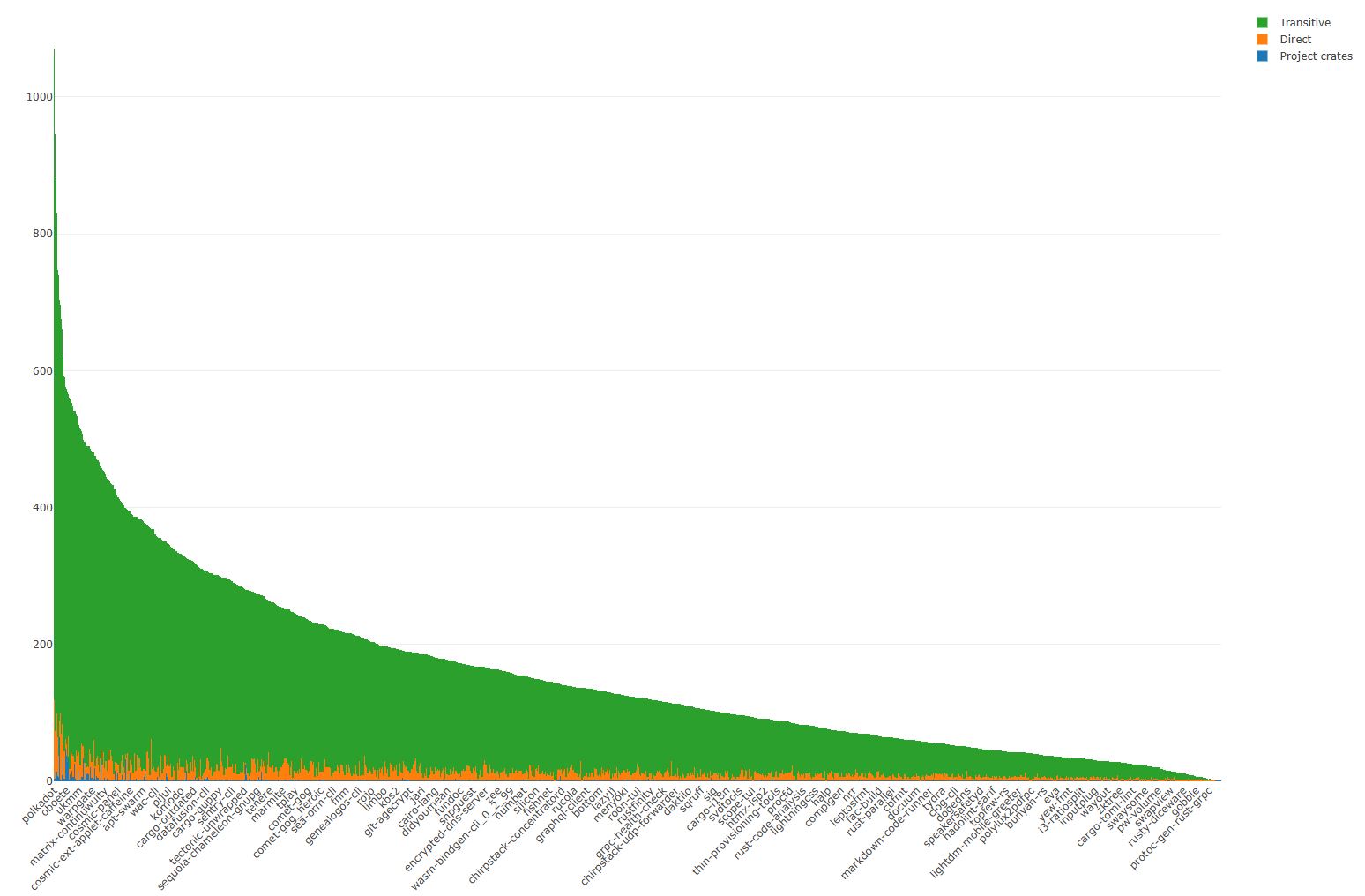
Project Analysis
- Total Projects Analyzed: 2300
- Average Internal Crates per Project: 3.8
- Average Direct Dependencies per Project: 15.7
- Average Transitive Dependencies per Project: 138.8
Overall Dependency Count
- Total Internal Crates: 8759
- Total Direct Dependencies: 36080
- Total Transitive Dependencies: 319137
Total & Percentage Breakdown
- Total Crates Count: 363976
- Internal Crates: 2.4% of Total
- Direct Dependencies: 9.9% of Total
- Transitive Dependencies: 87.7% of Total
- Combined Direct and Transitive Dependencies: 97.59% of Total
Direct Dependencies Distribution
- median=12.0, p25=6.0, p75=21.0, p90=32.0, min=0, max=162
- p75 of projects use <= 21.0 direct dependencies
Internal Crates Distribution
- median=1.0, p25=1.0, p75=2.0, p90=7.0, min=1, max=257
- p75 of projects use <= 2.0 main crates
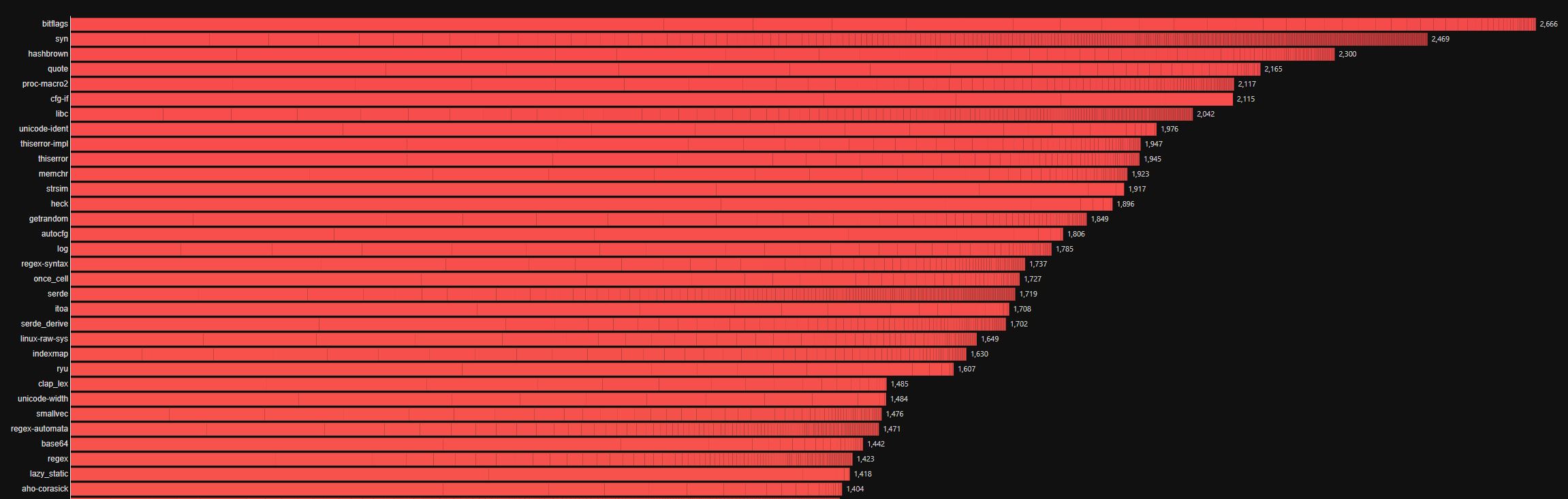
finding identical crates.io dependencies in 2312 buildRustPackage rust projects
a graph showing similar crates.io dependencie configurations in 2312 buildRustPackage rust projects.
📊 interactive d3 graph (30s load time)
findings:
nixpkgs 1c3d5a53f03f2eb5677f6f3b34f0ef31261ba485 we find 2574 rust programs compiled via
buildRustPackage.with 2312 (out of the 2574) i could use for statistics (that is 90% of all
buildRustPackagesusages)these 2312 rust projects have 360909 crates.io dependencies and on average each project has 360909/2312 = 158 dependencies
out of 360909 crates.io dependencies, only 44248 are unique crates.io dependencies, meaning there is a huge set of crates which are compiled with an identical configuration
hypothesis
cargo-libnix already is capable of reusing compiled
libraries and thus we would have to build 8.1 times less
dependencies! it remains to be seen if this 8.1 factor
translates in 8.1 compile time and it could be more or even less.
hydra.nixos.org on average, would then only have to compile 158/8 = ~20 dependencies per rust project when picking up a new project and start working on them and instead they would use binary substitudes
in the age of AI
cargo+libnixcould speed up things even more as agents are far more wasteful with repository checkouts and rebuilds than humans are (a hunch of mine, needs proper backing)rustc supports incremental builds and we could even wrap that into dynamic derivations
it would be interesting to compile a list of build times, source code checkout size and binary store path size for each of the 44248 unique crates.io crates and then use these build statistics to get a measurement on the actual combined build times and disk space impacts.
summary
using the integration of cargo+libnix could lead to
improved build efficiency, faster
onboarding, and a more streamlined developer
experiences.
shoutout to the nixpkgs maintainers: excellent work! without your diligent efforts in maintaining this extensive collection of software, i wouldn’t have been able to gather such valuable data.